
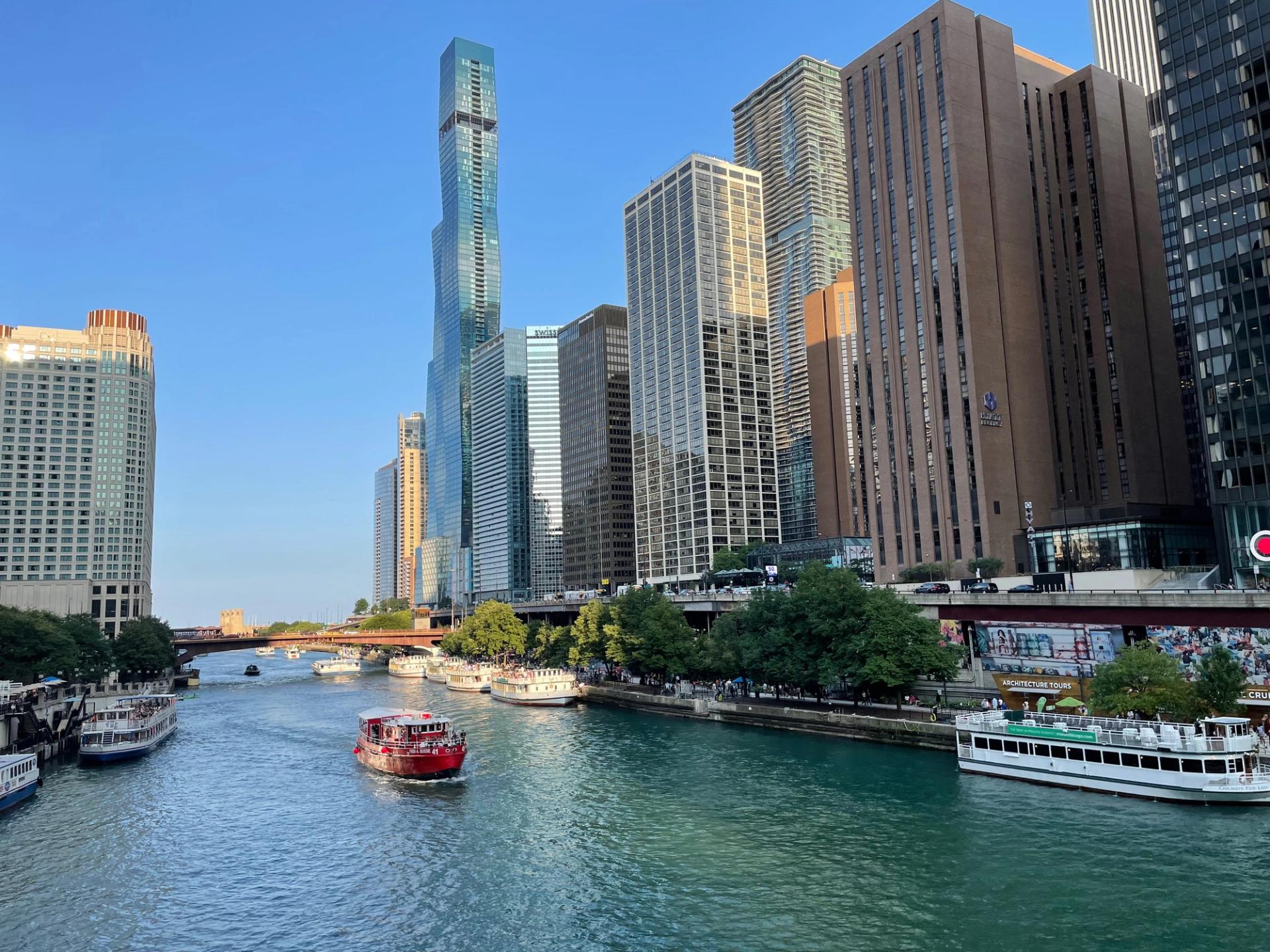
On Saturday, thousands of volunteers will gather at over 75 sites along the Chicago-Calumet River System as part of a massive clean-up effort: Chicago River Day. Hosted by Friends of the Chicago River, this day of service has been a city tradition since 1999.
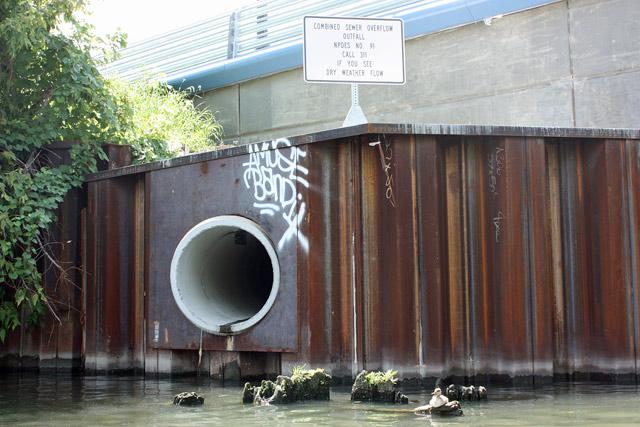
Over those years, the river’s cleanliness has improved substantially. Today’s river is considered a refreshing attraction. But once upon a time, it was Chicago’s toilet.
The Stinking River
“The city’s toilet … the city’s bathroom.” That’s exactly how Chicago State University’s Dr. Lionel Kimble Jr. put it to WTTW. Throughout the mid- to late 1800s, the city used the river like an open-air sewer, dumping human and industrial (read: meatpacking) waste into both the North and South branches. Not long after Chicago’s founding in 1837, its river earned a nickname: “The Stinking River.”

An illustration of Chicago in 1830 at Wolf Point, the junction of the North and South Branches of the Chicago River. (The Illustrated London News / Getty)
The contents of the Stinking River would flow, slow and brown, through the city, east into Lake Michigan. Then Chicagoans would drink polluted water and get very, very sick. In the summer of 1849, close to 700 Chicagoans died of cholera: roughly 3% of the entire city.
Another outbreak in 1854 killed 1,400 people.
Throughout the 1870s and ‘80s, in the wake of the Chicago fire, the city grew rapidly which worsened pollution. Diseases like typhoid killed 4,000 infants annually.
The solution? Changing the direction of the river.
Reversing the River
Engineers knew the river could eventually flow backward, away from the lake and into the Mississippi Watershed, if they built a large enough canal in the right spot. (West of the city, along a subcontinental divide, for you geology nerds.)
Enter the Chicago Sanitary and Ship Canal, a 28-mile stretch connecting the Chicago and Des Plaines rivers. Work began in 1892 as laborers excavated 42 million cubic yards of soil. When opened, the canal would send wastewater down the Mississippi River to the Gulf of Mexico. Chicago claimed pumping stations, which pulled from Lake Michigan, would purify the water as it went downstream — Missouri was not buying it.
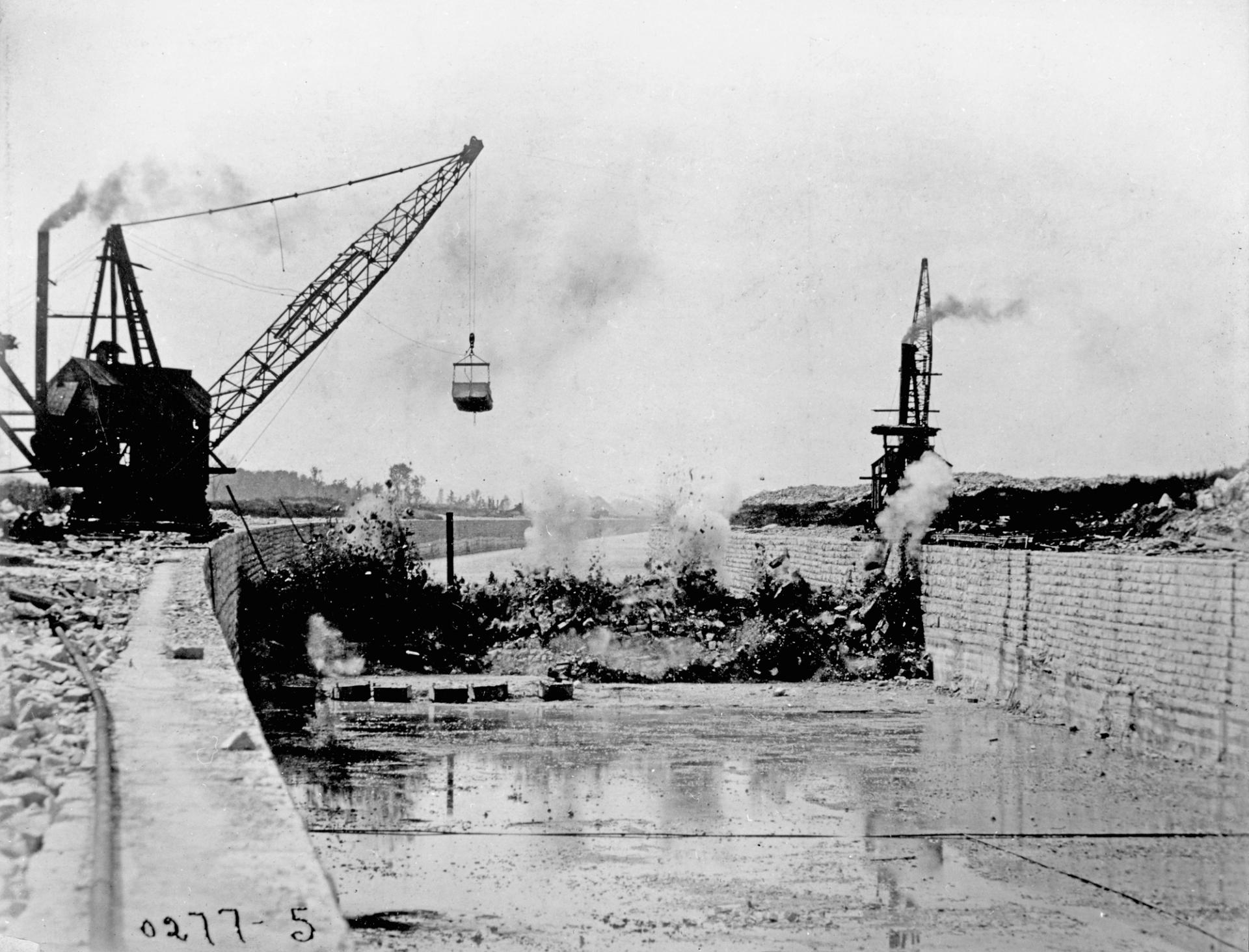
A dam explosion during construction of the Chicago Sanitary and Ship Canal, potentially from Jan. 2, 1900. (Photo by Chicago History Museum/Getty Images)
As Missouri sued Illinois, canal trustees rushed to complete the project. At dawn on January 2, 1900, a small group gathered to break the final dam. It was a clandestine affair, just a few officials, friends, and sly reporters — no one wanted judges to know the reversal was complete. Weeks later, Chicago’s runoff reached St. Louis. Years later, Missouri’s suit made it to the U.S. Supreme Court which ruled in Chicago’s favor.
So next time you hail a water taxi or enjoy an Aperol Spritz on the Riverwalk, pour one out for St. Louis. You can also give back this Chicago River Day. And remember: Never dump animal entrails near your drinking water.